To be a Coptic Orthodox Contemplative Nun…
The Christian monastic embraces the monastic life as a sacred vocation offered wholly to God, with the ultimate aim of attaining eternal life in His presence. The principles governing monastic life are traditionally articulated in the “counsels of perfection.” The term monastic is derived from the Greek μοναχός (monachos), originating from μόνος (monos), meaning “alone” or “undivided,” signifying a life set apart and consecrated entirely to God. Monasticism is thus a religious way of life in which worldly pursuits are renounced in order to devote oneself fully to prayer, spiritual growth, and communion with God, all lived within the framework of the Church’s rites and daily liturgical life.
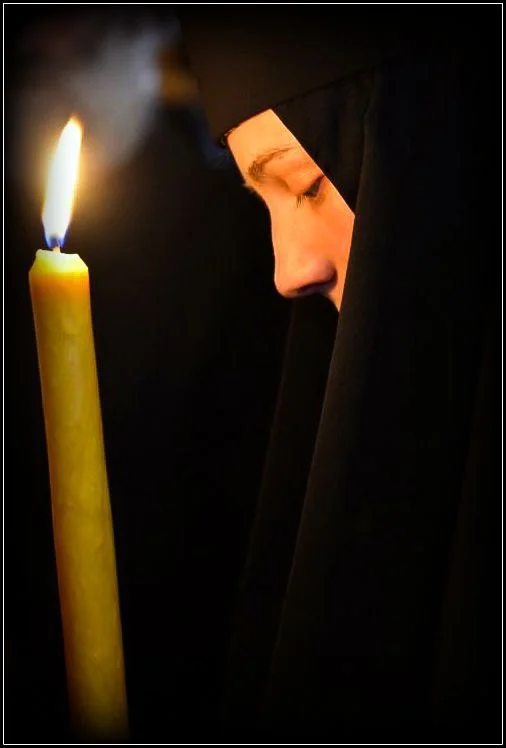
A professed nun, called to the vocation of monasticism, is a woman who dedicates her life to contemplation within a monastery and its monastic community, often described as a cloistered or enclosed community. Her service and prayer life are centred in and around the monastery, where she lives in solemn dedication, offering continuous prayer for the salvation of all souls.
In the Orthodox Church, nuns profess perpetual and solemn vows according to the monastic rites of the Coptic Orthodox Church, namely poverty, celibacy, and obedience. They live under the spiritual guidance and leadership of the Head of the Monastery, who oversees both their daily responsibilities and spiritual formation.
Within the monastery, a nun participates in the daily rhythm of communal worship, including the Synaxis, Midnight Praises, Holy Liturgies, and the observance of liturgical seasons and feasts such as Lent, Pascha (Easter), Nativity (Christmas), and all Lordly Feasts. This life of worship also includes the commemoration and veneration of the saints according to the Coptic Orthodox calendar. Time is also allocated for personal prayer, spiritual reading, and study, in accordance with the monastic rule and her individual spiritual guidance.
Nuns within the monastery also engage in various forms of handcraft and duties, primarily in service to the Church. These include the creation of Coptic iconography, stained glass windows, the sewing and embroidery of ecclesiastical and priestly vestments, hand embroidery for church use, screen printing, woodwork (such as crosses), leatherwork, the making of bishops’ and priests’ crowns, as well as publishing, graphic design, research work, and other traditional crafts. Many larger monasteries also maintain farms that provide dairy products and meat for the sustenance of the monastic community. These farms and their produce are likewise overseen and supervised by the nuns, integrating labour with prayer as an essential aspect of monastic life.