Love Appears
Divine word and Creation
Let’s consider the theological implications of two foundational passages in the Bible: John 1:1 (“In the beginning was the Word, and the Word was with God, and the Word was God”) and Genesis 1:3 (“And God said, ‘Let there be light,’ and there was light”). These verses offer a profound insight into the existence of a Creator who pre-exists creation, revealing the divine order and intentionality that characterise God’s nature and purpose.
John 1:1 – The Word as Eternal and Preexistent
The opening of John’s Gospel, “In the beginning was the Word,” intentionally mirrors the opening of Genesis to emphasise continuity and deepen understanding of God’s eternal existence. The term “Word” (Greek Logos) conveys profound theological significance: Logos is more than just “word” as spoken language; it denotes reason, order, and wisdom, hinting at a living, personal rationality that defines and expresses God’s nature. By saying “the Word was with God,” John indicates an eternal communion within the Godhead, while “the Word was God” affirms the divine identity of the Logos.
This reveals that before the material universe came into existence, God was already active, engaged in a divine self-expression. The Logos is thus not a created being but an uncreated and divine entity, eternally present with God. This serves as a theological assertion that creation did not bring about God’s identity; rather, God exists in a dynamic relationship within Himself, distinct from creation and fully self-sufficient.
Genesis 1:3 – The Creative Power of Divine Speech
In Genesis 1:3, God speaks light into existence with “Let there be light.” Here, the act of speech as a creative force indicates that creation arises not by accident or from pre-existing matter, but from God’s purposeful will. This spoken command shows that God’s word has power and authority to bring things into being from nothing (ex nihilo). Light, as the first created element, symbolises divine order imposed on chaos, a revelation of God’s presence as He initiates the structure of creation.
The phrase “Let there be light” reveals not only the Creator’s control but also His relational nature: God’s speech implies that His creation is both an extension of His intentional will and a reflection of His essence. The Logos here is the active, authoritative word that bridges God’s eternal existence and the created world.
Harmonising John 1:1 and Genesis 1:3 – The Word as the Light
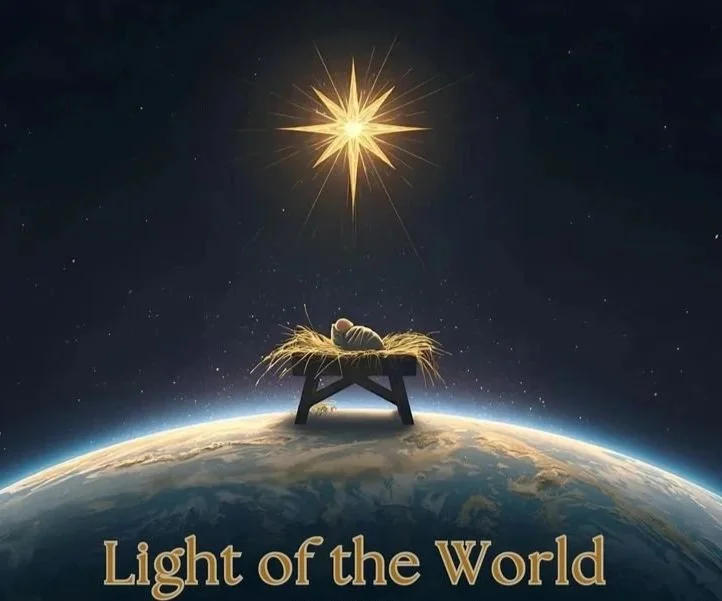
Theologically, these verses together establish that creation was birthed out of a relational, purposeful, and eternally preexistent God. In John’s Gospel, it is further stated, “In him was life, and the life was the light of men. The light shines in the darkness, and the darkness has not overcome it” (John 1:4-5). This light, pre-existent in the Logos, becomes manifest in the material universe as both a physical and spiritual reality.
Therefore, John 1 and Genesis 1 reveal that God, in His essence as Logos, preexists creation and initiates it through His spoken word. This insight affirms the Creator’s definitive presence and identity before any created thing, distinguishing God as transcendent, sovereign, and self-sufficient. The eternal Logos, who ultimately “became flesh” in Jesus Christ (John 1:14), thus stands as the ultimate revelation of the Creator to His creation, the Word by which and through whom all things were made, and the Light that dispels darkness both physically and spiritually.
Thus, both passages testify to an uncreated Creator whose eternal Word initiates, orders, and sustains creation, revealing a God who is relational and revelatory—a Being whose essence is expressed in creation but who transcends it entirely.
Saint Athanasius
Saint Athanasius of Alexandria (c. 296–373 AD)
Saint Athanasius, a leading defender of Nicene orthodoxy, wrote extensively on the Logos as eternal, uncreated, and fully divine, stressing that the Son is of the same essence (homoousios) as the Father. In On the Incarnation, he argued that the Logos preexists all creation, affirming both John 1:1 and Genesis 1:3 as demonstrating that Christ, as the Word, is the divine agent of creation who brings order and life.
Reference: Athanasius, On the Incarnation, Chapters 2-3; Against the Arians, Book I, Chapters 9-11.